Polari is a prime example of a system of slang that was used by people classified under the LGBT acronym. Being used when homosexual acts were illegal and heavily stigmatised in British society, it allowed gay men to create a sense of secrecy and solidarity in isolation from the broader populace. Polari is not exceptional in this regard. Around the world, gay men, lesbians, transgender people and related groups of people have been known to use systems of slang either to avoid persecution or to strengthen in-group bonds. In this article, the history and use of two of these systems of slang will be elaborated upon.
Onee-Kotoba
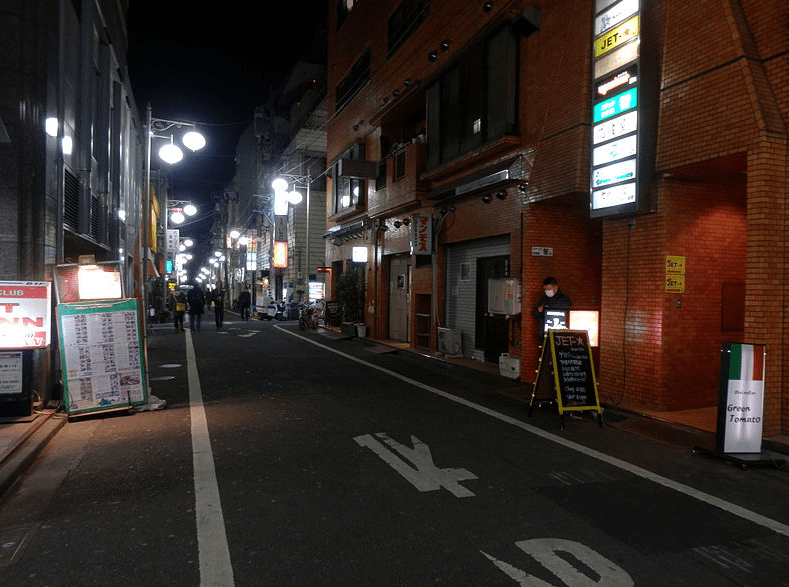
Believed to have begun at some point in the early Shōwa era (1926-1989), the term onee-kotoba (オネエ言葉) refers to a peculiar form of language used by gay and transgender people in Japan (Abe, 2010, pp. 53-57). It utilises many feminine expressions in Japanese but differs in the sense that is also often combined with many crude elements of speaking often associated with male speech (Lunsing & Maree, 2004, pp. 96-97). An example of this given by Lunsing and Maree (2004, p. 96) is the following sentence:
Japanese: あたし今カレーを食ったら、下痢だわ。
In Roman characters: Atashi ima kare o kuttara geri da wa.
English: If I were to eat curry now, I would get diarrhea.
In this sentence, feminine terms such as ‘atashi’, ‘da wa’ are used. However, crude (and thus seemingly masculine) terms such as ‘kuttara’ and ‘geri’ are used (Lunsing & Maree, 2004, p. 96).
Whilst generally tolerated by wider society, concepts of conformity which have traditionally pervaded Japanese society have meant that those classed under the LGBT acronym have been ostracised by wider society (Tamagawa, 2020, p. 2). In this sense, onee-kotoba (assumingly) functions as a way of creating a sense of community amongst LGBT people in Japan. However, it is also the subject of backlash from people who view the feminine aspects of it as mocking women, as well as gay men who view masculine men as an ideal and therefore deplore the effeminacy associated with it (Lunsing & Maree, 2004, pp. 96-97).
IsiNgqumo
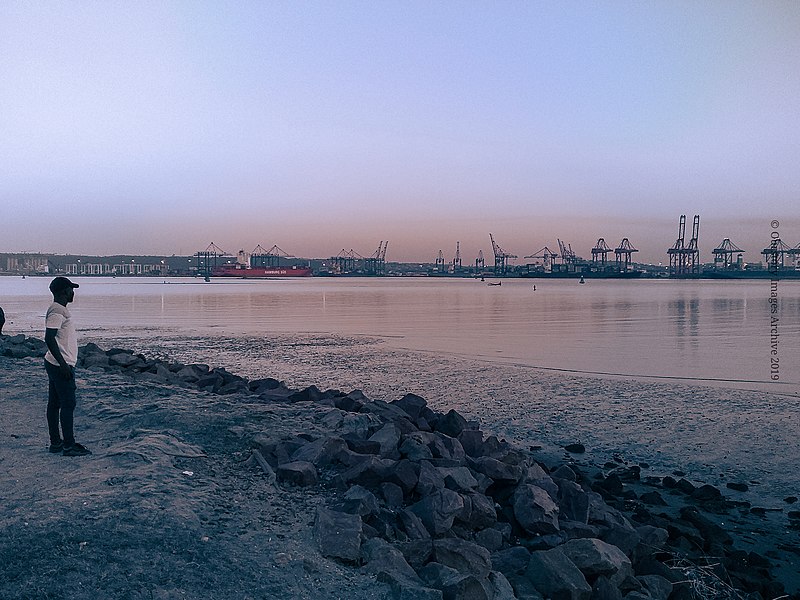
Spoken primarily in areas of South Africa where Nguni languages are spoken, IsiNgqumo is a Zulu-based argot (Rudwick, 2010, pp. 113-114). Although it is unclear where IsiNgqumo originated from, there exists two theories on its origins (Rudwick, 2010, p. 118). One theory posits that it may have originated from South African mines in the Apartheid era, whereby older men would often have homosexual relations with younger men and boys (Rudwick, 2010, p. 114). A second theory claims that it originated from Mkhumbane Township in Durban (Rudwick, 2010, p. 114).
A noticeable feature of IsiNgqumo is a scarcity of English loanwords despite a heavy influence of the English language in broader South African society (Rudwick, 2010, p. 114). Instead, many words in IsiNgqumo are derived from archaic Zulu vocabulary (Rudwick, 2010, p. 114). Examples of vocabulary in IsiNgqumo include ‘ukukala’ (‘to look’), ‘umngeni’ (‘water’) and ‘ukuqeqa’ (‘to drink’) (Rudwick & Ntuli, 2008, pp. 448-449).
In contemporary times, South Africa continues to be one of the only jurisdictions in Africa which allows same-sex marriages performed domestically to be legally recognised (Rudwick, 2010, p. 112). Furthermore, the South African Bill of Rights includes protections against discrimination on the basis of sexual orientation (Rudwick, 2010, p. 112). However, South Africans who are both black and LGBT report a sort of ‘double-edged sword’ regarding their sexual orientation or gender identity (Rudwick, 2010, p. 115). On the one hand, gay and transgender Zulu people report societal rejection from other Zulu people due to their sexual orientation or gender variance (Rudwick, 2010, p. 115). On the other, rejection by and distancing from Caucasian LGBT people due to their ethnicity seemingly occurs (Rudwick, 2010, pp. 115 & 120). In this sense, IsiNgqumo is seen to function as a way of both concealing language, as well as strengthening a collective sense of identity amongst gay speakers of Nguni languages (Rudwick, 2010, pp. 115 & 119).
Conclusion
In conclusion, it is clear the Polari is by no means unique in the sense of being a language variety used by people under the LGBT acronym. This can be seen when looking at Onee-Kotoba and IsiNgqumo used in both Japan and South Africa respectively, which – like Polari – came to be used by LGBT people in a broader context of societal rejection.
Sources
Abe, H. (2010). Queer Japanese. Palgrave Macmillan. https://doi.org/10.1057/9780230106161
Lunsing, W. & Maree, C. (2004). Shifting Speakers: Negotiating Reference in Relation to Sexuality and Gender. In Okamoto, S. & Smith, J. S. S. (Eds.), Japanese Language, Gender, and Ideology (pp. 92-109). Oxford University Press.
Rudwick, S. & Ntuli, M. (2008). IsiNgqumo – Introducing a gay Black South African linguistic variety. Southern African Linguistics and Applied Language Studies, 26(4), 445-456. https://doi.org/10.2989/SALALS.2008.26.4.3.675
Rudwick, S. (2010). ‘Gay and Zulu, we speak isiNgqumo’: Ethnolinguistic identity constructions. Transformation: Critical Perspectives on Southern Africa, 74, 112-134. https://doi.org/10.1353/trn.2010.0016
Tamagawa, M. (2020). Japanese LGBT Diasporas. Palgrave Pivot Cham. https://doi.org/10.1007/978-3-030-31030-1
Images
Asanagi. (2013). [Photograph of Shinjuku Ni-Chome]. Wikimedia Commons. https://commons.wikimedia.org/wiki/File:Shinjuku_2-chome_2013-01-30.JPG
Jalubani, N. (2019). [Photograph of Durban Harbour]. Wikimedia Commons. https://commons.wikimedia.org/wiki/File:Durban_Harbour.jpg. Under a CC BY-SA 4.0 License
 Boyno Polari


Leave a comment