When people hear the word ‘Polari’, many assumingly do not understand what this word refers to. This page will define what Polari is, provide a history of the language, as well as detail why you may wish to learn it.
What is Polari?
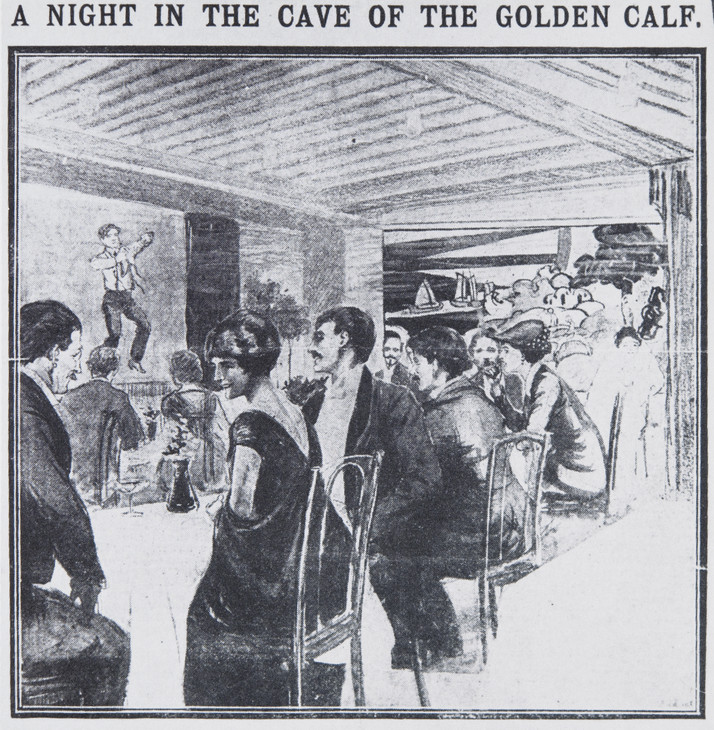
Meaning ‘talk’, Polari was a non-standardised argot (a system of slang) widely known for its use by homosexual men, and to a lesser extent by entertainers (Farge, 2021). It was explicitly intended to be unintelligible for English-speakers who were not familiar with it, allowing people who used it to freely speak about a variety of topics without people around them understanding what was being said, as well as strengthening collective identities (Farge, 2021; Baker, 2002, pp. 13-15 & 67-70).
As Polari is not standardised, the content of Polari differed depending on time period, region and social group (Baker, 2002, pp. 11, 25-26, 40 & 70-73). For example, Paul Baker (2002, p. 40) – who conducted research on the version of Polari used by homosexual men – notes that amongst homosexual men who used Polari, there are only a few core terms which are recognisable to all of these men, with many words being peripheral and only recognisable to certain subsections of these men.
In the interest of bridging the variations within Polari and being able to present a coherent system of slang, the version of Polari taught on this site is a ‘standardised’ version which is based primarily on the two most documented versions of Polari: the versions used by homosexual men and entertainers. In turn, the vocabulary taught on this website is based on a corpus of texts written in Polari as they pertain to either entertainers or homosexual men. If you would like to learn more about how this website created a ‘standardised’ form of Polari, information is available here.
The History of Polari
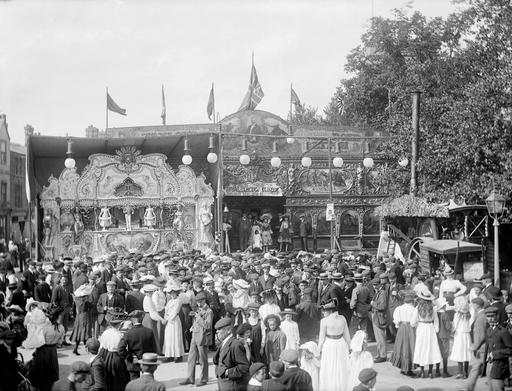
It is said that the earliest form of Polari was called ‘Cant’ – an argot used from the 16th century primarily by criminals (Baker, 2002, p. 20). In reality, the Cant and 20th century Polari differ significantly, and it is very possible that Polari is not a direct continuation of Cant, and instead simply derives a large amount of vocabulary from it. Nonetheless, many terms from Cant can be seen in Polari such as bencove (friend) and ken (house) (Baker, 2002, pp. 164 & 178).
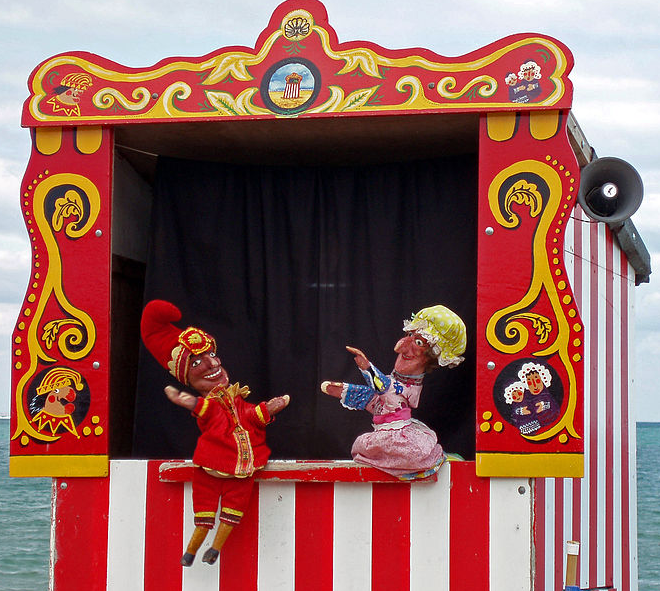
Parlyaree denotes the form of Polari used by entertainers mostly in the 19th – 20th century (Farge, 2021). A significant feature of Parlyaree which in turn can be seen in the form of Polari used by homosexual men is the large number of words from Romance languages, particularly Italian and Sabir (a trade language derived primarily from Romance languages such as Occitan) (Baker, 2002, pp. 27-29). This was at the same time that notable amounts of Italian migrants from mainly Northern Italy had migrated to the United Kingdom from the 18th century, eventually comprising one of the largest groups of foreign nationals in the United Kingdom by the early 19th century (King, 1977, pp. 176-177; Hancock, cited in Baker, 2002, pp. 27-28).
The variety of Polari known to be used be homosexual men in the 20th century had loanwords from a variety of sources, including Romance languages, Yiddish, Angloromani, Cant, American slang, and various other sources (Baker, 2002, pp. 19-38). With the decriminalisation of homosexual relations between men, however, the use of Polari declined due to its primary purpose of concealing speech losing necessity amongst homosexual men (Baker, 2002, pp. 113-115). This was in combination with other factors such as the stigmatisation and sidelining of Polari within homosexual subcultures in Britain in the 1970s (Baker, 2002, pp. 115-124). The status of its use by entertainers in contemporary times is unclear.
Why Learn Polari?
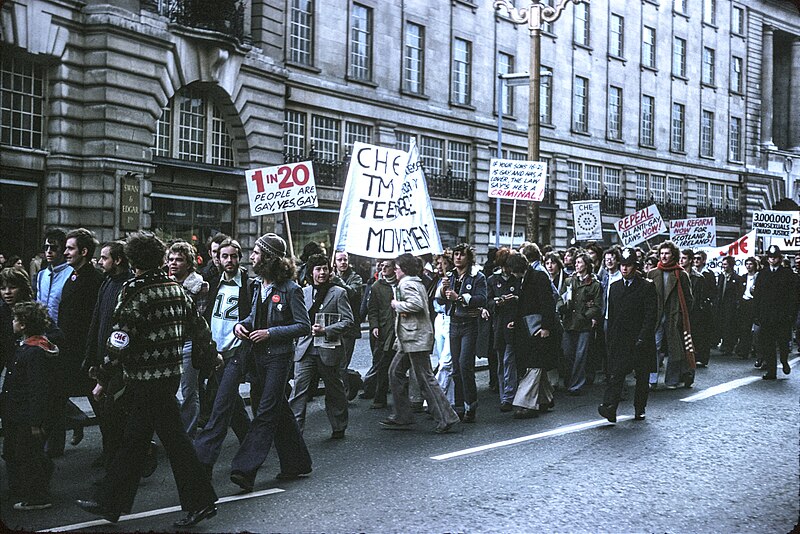
Learning Polari will not provide the same benefits that learning an official and widespread language such as German, Mandarin or Swahili will. Nonetheless, learning Polari is not without benefits. Particularly, knowing Polari can begin to provide an insight into the lives and values of the various people who historically used it. This is particularly the case when it comes to understanding LGBT history in Britain in the 20th century, or the history of entertainers in Britain, due to the standard of Polari taught on this site being based on the forms of Polari used by these two groups of people. With arguably little being publicly understood about the history of LGBT people prior to the Stonewall Riots of 1969 and the subsequent Gay Liberation Movement, understanding Polari will allow you to understand the often-underrepresented history of LGBT people in Britain prior to the Gay Liberation Movement. Furthermore, the history of entertainers in Britain tends to be underrepresented. By learning Polari, you will be able to gain an insight into this aspect of history as well.
Sources
Baker, P. (2002). Polari – The Lost Language of Gay Men. Routledge.
Cook, M. (2003). London and the culture of homosexuality, 1885-1914. Cambridge University Press.
Farge, H. (2021, June 22). The language of the fairground community: secrets of Parlyaree. University of Sheffield. https://www.sheffield.ac.uk/library/news/language-fairground-community-secrets-parlyaree
King, R. (1977). Italian Migration to Great Britain. Geography, 62(3), 176-186. https://www.jstor.org/stable/40568731
Images
ALoan. (2006). [Swanage Punch and Judy Booth]. Wikimedia Commons. https://commons.wikimedia.org/wiki/File:Swanage_Punch_%26_Judy.JPG
Daily Mirror. (1912). [A Night in the Cave of the Golden Calf 4 July 1912 in The Daily Mirror]. Wikipedia. https://en.wikipedia.org/wiki/File:Cave_of_Golden_Calf.jpg
Strzelecki, J. (1975). [Demonstration in support of LGBT in London, December 1975]. Wikipedia. https://en.wikipedia.org/wiki/File:Demonstration_in_support_of_LGBT_in_London,_December_1975_02(js).jpg. Under CC BY-SA 3.0 License
Taunt, H. (1905). [St Giles’ Fair]. Wikimedia Commons. https://commons.wikimedia.org/wiki/File:St_Giles%E2%80%99_Fair,_Oxford,_1905.jpg?uselang=en#Licensing
 Boyno Polari


.jpg)

Leave a comment